Next-generation IT infrastructure

The next generation of IT infrastructure promises to reduce costs and improve effectiveness. Yet implementation requires overcoming several significant challenges, from security to economics.

The pressure on IT infrastructure leaders is unrelenting. They must deliver higher service levels and new IT-enabled capabilities, help accelerate application delivery, and do so while managing costs. As standard IT improvements near a breaking point, it’s no wonder that many IT infrastructure leaders have started to look for more transformative options, including next-generation IT infrastructure (NGI)—a highly automated platform for the delivery of IT infrastructure services built on top of new and open technologies such as cloud computing. NGI promises leaner organizations that rely more on cloud-provider-level hardware and software efficiencies. In addition, NGI facilitates better support of new business needs opened up by big data, digital customer outreach, and mobile applications.

To understand how senior executives view NGI, we canvassed opinions from invitees to our semiannual Chief Infrastructure Technology Executive Roundtable. The results were revealing: executives expressed strong interest in all key NGI technologies, from open-source infrastructure-management environments to software-defined networking, software-as-a-service offerings, cloud orchestration and management, and application-configuration management. Yet most have not yet fully taken advantage of the promise of NGI, largely because of the up-front investment required. The immaturity and complexity of the technology is also slowing adoption, as is concern about the security of the public cloud, particularly with respect to companies’ loss of control in the event of private litigation or inquiries from governmental agencies.

For instance, executives in highly regulated industries such as health care and banking worry that public-cloud providers are not always well equipped to meet those industries’ unique regulatory requirements. As a result, they prefer to keep critical data within their own corporate firewalls. At the same time, executives recognize the potential security benefits of the public-cloud providers’ scale and operational expertise. Given their focus and size, public-cloud providers are more likely to have the expertise to combat security threats and prevent surreptitious breaches. The public cloud may gain greater acceptance if cybersecurity threats outpace the ability of smaller IT departments to combat them.

These considerations weigh on the objectives executives cited as priorities for their IT organization in the next one to three years (exhibit). Achieving all their goals—including generating more value from data, improving system security, and migrating legacy infrastructure to the cloud—requires “true program managers,” leaders who know how to work with internal and third-party sources to deliver an overall program rather than a discrete project. NGI involves deploying technological solutions across the full “stack,” from the data center to hardware to middleware and through the application layer, and often entails fundamental changes to the enterprise’s work flows and IT operating model. Make no mistake: IT infrastructure leaders are excited about the promises of NGI. But they’re equally clear-eyed about the challenges.

more details : IT infrastructure
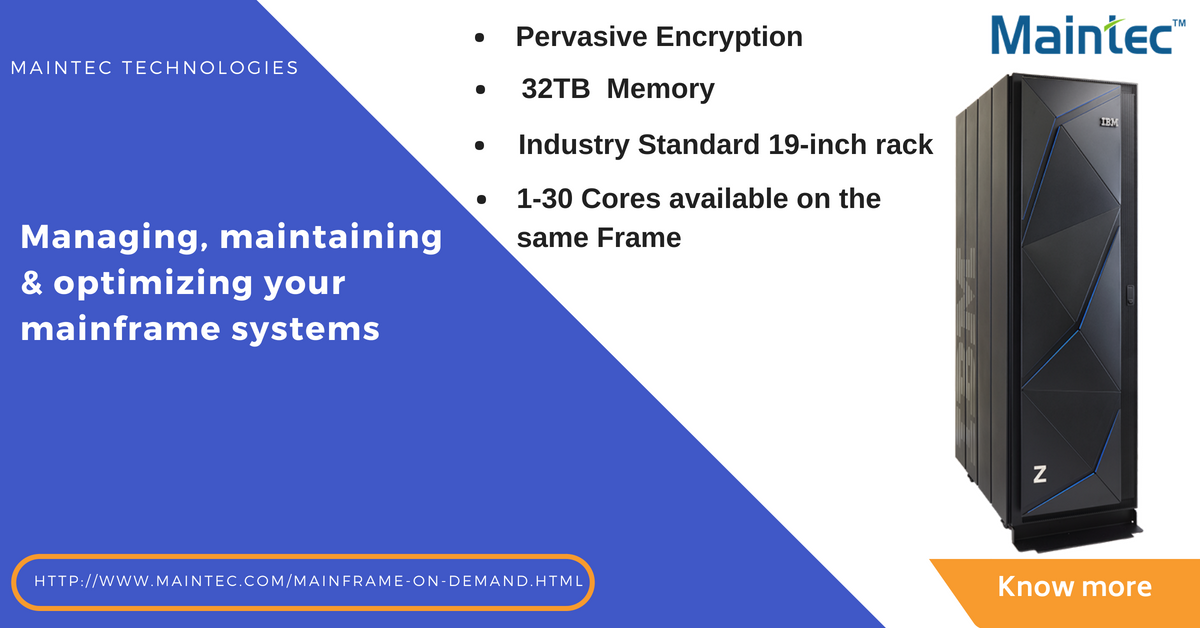
The Staying Power of Mainframes

In spite of the fact that an ongoing review about centralized computer use by state governments found that the registering workhorses are an imperiled species, a few clients and sellers aren’t as certain. The more probable situation is an IT domain that incorporates centralized computers, cloud and other on-prem stages.

“Centralized computers are staying put,” said Wisconsin CIO David Cagigal. That is on the grounds that the state, in the same way as other different associations in people in general and private divisions, needs to process billions of exchanges for each year on a safe, solid stage – two qualities of centralized servers.

Wisconsin has two centralized servers, one in Madison and a reinforcement in Milwaukee, that were conveyed in January as a feature of the state’s intend to cycle the frameworks out like clockwork. In any case, it additionally utilizes more up to date advancements: disseminated processing stages and Oracle Exadata for big business asset arranging exchanges, for example, fund, acquisition and HR.

The state additionally buys in to cloud administrations. For example, it’s about part of the way through moving email to Microsoft Office 365, and it’s receiving voice over IP in the cloud with 3,000 gadgets previously moved and another 35,000 to go.

“Our future, I believe, is shake strong on account of the mixed arrangement, or cross breed arrangement, that we have with different stages,” Cagigal said.

Choices to move applications off the centralized server have been founded on expense, Cagigal stated, yet those applications speak to a small amount of what the centralized computer handles – right now around 16 billion exchanges per year – and doesn’t require getting rid of it. Truth be told, he anticipated the centralized computer will turn out to be increasingly dug in after some time.

“On the off chance that you take a gander at Obamacare and the expanded requirement for electronic wellbeing records, it’s simply going to build the volume, thus in this way we turn out to be significantly more reliant on the centralized server,” he said. “It will develop naturally by the volume of exchanges yet won’t develop by the quantity of new applications.”

Furthermore, that is OK, he included, on the grounds that it’s taking care of enough handling each day for what it’s worth. “The present condition is a heritage domain. It has not changed that a lot throughout the years,” Cagigal said. “We truly haven’t built up another application on the centralized server and don’t envision doing that.”

All things considered, an ongoing report by the National Association of State Technology Directors found that 79 percent of respondents said they don’t see a future interest for centralized computer processing power. That can’t be valid, Cagigal stated, in light of the fact that the handling volume doesn’t leave. Rather, what he sees as almost certain is a move of proprietorship.

“At the point when individuals say that they’re being diminished, possibly the centralized servers are in the cloud, by a cloud supplier, yet despite everything someone has to possess a centralized server,” he said.

Sam Knutson, VP of item the board at Compuware, an organization whose bread and butter is centralized servers, said the stage might be 50 years of age, yet it’s a long way from obsolete on the grounds that makers, for example, IBM have reliably modernized their contributions. The outcome is single stage on which offices can run decades-old application code and more up to date programming dialects, for example, Java.

“Working code is gold,” Knutson said. “On the off chance that I’ve composed code more than 40 years, and it has the majority of the business procedures of my express, my organization, my organization, that is a huge venture I’ve made. If I somehow happened to take that code and revamp precisely the same business process in an alternate dialect in an alternate stage, I wouldn’t have made any an incentive for the native. It wouldn’t give any better administration.”

Furthermore, he stated, centralized computers and cloud are integral. For instance, organizations are better off utilizing Office 365 for email than facilitating their very own framework on a centralized server. On the off chance that they need to move exclusive applications off the centralized computer, they’d must will alter their procedures to what’s accessible.

Numerous organizations find that their current centralized server applications serve their necessities and agree to controls in manners bundled cloud arrangements may not. “Two-stage IT is the eventual fate of organizations, and government substances that are taking a gander at this keenly,” he said.

Centralized servers have even given IBM’s income a lift. Frameworks income, including the new z14-based line, was up 23 percent to $2.18 billion, as indicated by a July Market Watch article. Investigators had anticipated $1.86 billion.

“This is the most continuing stage that you’ve seen out there,” IBM Chief Financial Officer James Kavanaugh said amid a profit phone call that month. “We keep on benefiting from increasing new rising remaining tasks at hand under that stage.”

more details : mainframe outsourcing